Daily from 8:00 AM to 6:00 PM
Certified Coverage: Riyadh • Jeddah • Eastern • Makkah • Qassim
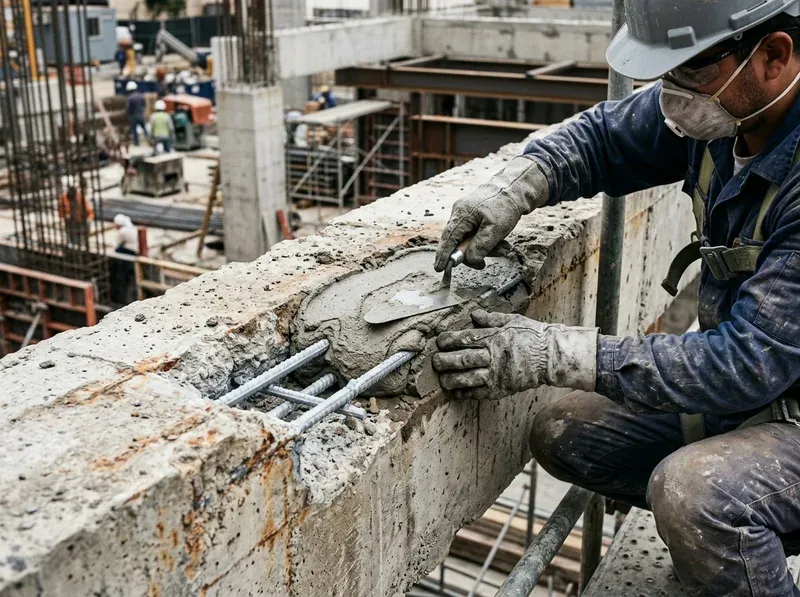
At Manzel El Deqa, concrete repair is founded on rigorous engineering diagnosis of carbonation depth and rebar corrosion before selecting the optimal rehabilitation technique for each structural member.
Pinpointing the root structural cause of cracking or corrosion before commencing remediation.
Utilizing certified polymer-modified mortars, structural epoxies, and aerospace-grade carbon fiber.
Itemized breakdown of all execution steps and material bill of quantities with zero hidden costs.
Specialized technical crews supervised by senior structural engineers ensuring SBC compliance.
In Saudi Arabia's challenging climatic and geotechnical environment—ranging from saline high-humidity coastal zones in Jeddah, Dammam, and Khobar to severe thermal contraction and subterranean water dynamics in Riyadh and Makkah—structural defects require scientific intervention rather than superficial cosmetic covering.
At Manzel El Deqa, concrete repair is founded on rigorous engineering diagnosis of carbonation depth and rebar corrosion before selecting the optimal rehabilitation technique for each structural member. We identify the driving chemical and mechanical catalysts behind defects to prevent recurrent failures, protect structural integrity, and ensure complete compliance with the Saudi Building Code (SBC).
Early detection prevents progressive structural degradation and saves tens of thousands in extensive demolition. Inspect your property for these critical warning indicators:
Spalling concrete cover exposing corroded, brown-rusted rebar.
Longitudinal cracks parallel to reinforcement rebar in columns or slabs.
Visible delamination and blistering in ceiling plaster due to expanding rusted steel.
Voids and honeycombing resulting from insufficient compaction during original casting.
Our engineering execution adheres strictly to documented quality benchmarks and laboratory testing stages:
Mechanical sound testing, phenolphthalein carbonation testing, moisture check, and loss of effective steel section calculation.
Installation of temporary hydraulic jacks and heavy-duty shoring props if member safety is critical before chipping.
Careful mechanical chipping behind rebar by at least 20mm to secure full circumferential mortar encapsulation.
Mechanical wire brushing, zinc-rich coating, and chemical anchoring of supplemental reinforcing bars where loss exceeds 20%.
Application of structural bonding agent, non-shrink polymer mortar placement, and controlled moist curing per engineering codes.
We exclusively deploy code-certified chemical composites, structural polymers, and engineered resins proven to withstand severe environmental exposure:
Every facility presents distinct physical conditions. Pricing is transparently structured around verified engineering metrics:
Masking active fractures or rebar oxidation under putty or paint traps moisture inside, accelerating structural loss until sudden catastrophic failure occurs.
Standard Portland cement shrinks substantially upon hydration, forming micro-gaps that invite oxygen and water to resume degradation beneath the repair patch.
Addressing structural and geotechnical defects within the first month costs up to 75% less than waiting until foundation settlement or rebar section loss requires heavy shoring and carbon fiber encapsulation.
Book an inspection appointment with our structural engineering team to receive an exact diagnosis and certified estimate.
Direct engineering answers concerning technical specifications, material chemistry, and execution timeframes.
No. Covering over rust accelerates internal oxidation in a concealed state, leading to sudden partial structural failure. Corroded concrete must be fully removed, rebar protected, and structural mortar applied.
CFRP carbon fiber laminates and sheets are required when a member has lost a significant percentage of its design load capacity, or when facility owners seek to increase service loads without adding dead weight.
Our engineering inspection teams for Concrete Repair & Rehabilitation cover properties and projects across the following cities and regions:
Do not allow structural deterioration to escalate. Our engineering team is ready to inspect, assess, and deliver certified reports and BOQs.